What This Article Covers
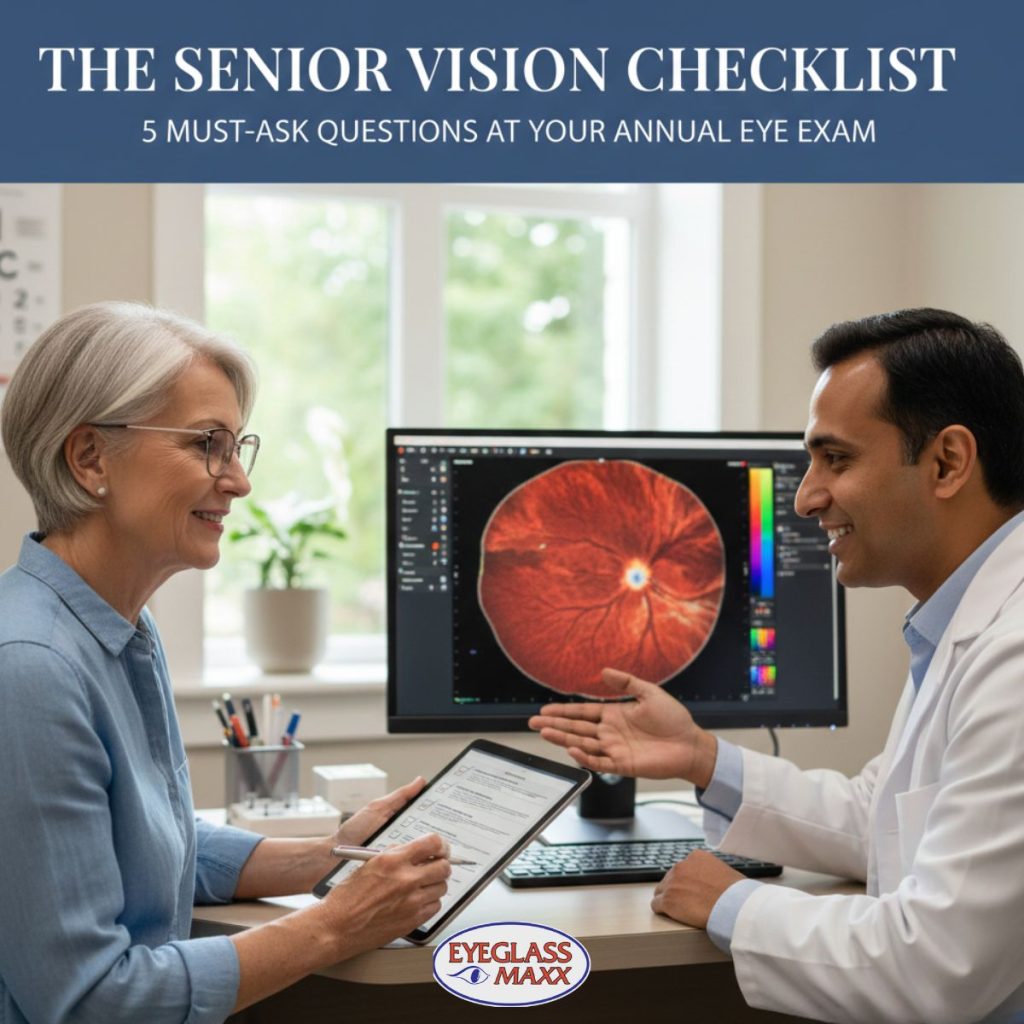
Getting your eyes examined shouldn't feel like a mystery. In this guide, we'll walk you through every step of a comprehensive eye exam, from the first chart on the wall to the final retinal photo, so you know exactly what to expect before you walk in. We'll explain the difference between a routine vision screening and a full medical eye exam, break down how often you should go based on your age and health history, and share the warning signs that mean you shouldn't wait for your next annual visit. At EyeglassMaxx in Sarasota, we perform thorough, affordable eye exams with same-day availability for walk-in patients.
The Difference Between a Vision Screening and a Comprehensive Eye Exam
Many patients are surprised to learn that the quick eye chart test at their school, pediatrician's office, or the DMV is not an eye exam. It's a vision screening, and there's a significant difference.
| Feature | Vision Screening | Comprehensive Eye Exam |
| Who performs it | School nurse, pediatrician, DMV | Licensed optometrist (OD) |
| Time required | 2–5 minutes | 45–90 minutes |
| Tests included | Distance visual acuity only | 10+ tests covering full eye health |
| Detects glaucoma | No | Yes |
| Detects macular degeneration | No | Yes |
| Detects diabetic eye disease | No | Yes |
| Prescription accuracy | Not provided | Precise, customized Rx |
| Insurance billing | No | Vision and/or medical insurance |
A vision screening can flag obvious nearsightedness, but it cannot detect the conditions that most frequently lead to permanent vision loss: glaucoma, diabetic retinopathy, macular degeneration, and cataracts. These conditions are largely silent in their early stages. Only a comprehensive exam by a licensed optometrist gives you a complete picture of your eye health.
Medical vs. Routine Eye Exams: Why It Matters for Insurance. If you have diabetes, hypertension, a family history of glaucoma, or are experiencing symptoms like flashes, floaters, or sudden vision changes, your eye exam may be billed as a medical visit rather than a routine vision benefit, which changes how your insurance applies. This distinction matters significantly for coverage. Our front desk team at EyeglassMaxx can help clarify which applies to your visit before you sit down.
Step-by-Step: What Happens During a Comprehensive Eye Exam
We've guided thousands of patients through this process at our Sarasota location. Here's exactly what you'll experience from the moment you check in.
Step 1: Patient History & Health Intake (~5–10 min)
Your optometrist will review your medical history, current medications, family history of eye disease, and any vision complaints — blurry distance vision, eye strain after screens, headaches, or halos around lights. This context shapes every test that follows. Don't hold back: "small" symptoms often point to meaningful findings.
Step 2: Visual Acuity Testing (~3–5 min)
This is the classic chart on the wall, or more commonly today, a projected digital chart. You'll read lines of letters at a distance with each eye covered separately. Results are scored as a fraction (20/20, 20/40, etc.) and establish your baseline sharpness of sight. This does not tell us why your vision is what it is — that comes in the steps below.
Step 3: Preliminary Tests — Color Vision, Depth Perception, Eye Coordination (~5 min)
A series of quick assessments check how well your eyes work together: color vision plates, a stereopsis (3D depth perception) test, and cover-uncover testing to detect eye turns or amblyopia (lazy eye). These tests matter especially for children, new drivers, and patients with neurological health concerns.
Step 4: Autorefraction (~3 min)
You'll look into a mounted instrument and focus on a small image while it calculates an estimated prescription automatically. This gives your optometrist a starting point for the manual refraction that follows. It's a helpful tool — not a final prescription, and never used alone to determine your lenses.
Step 5: Refraction — "Which Is Better, 1 or 2?" (~10–15 min)
This is the heart of the exam. You'll look through a phoropter — the large lens device — while your optometrist cycles through lens combinations, asking the classic question. Your answers, combined with the autorefraction data, allow the doctor to determine your precise prescription for distance, near, and intermediate vision. If two options look equally blurry or equally clear, say so. Honesty here produces the most accurate result.
Step 6: Slit-Lamp Examination (~5 min)
Your doctor examines the front structures of your eye — cornea, iris, lens, and conjunctiva — under high magnification. This is how early cataracts, corneal irregularities, dry eye disease, and inflammatory conditions are identified. It is completely painless and takes just a few minutes.
Step 7: Intraocular Pressure (Tonometry) (~2–3 min)
This test measures the fluid pressure inside your eye — a primary screening tool for glaucoma, which can develop with no symptoms until meaningful vision has already been lost permanently. You may receive a brief puff of air (non-contact tonometry) or a gentle touch with a numbing drop applied first (applanation tonometry). Either method is quick and non-invasive.
Step 8: Retinal Examination (~10–20 min depending on dilation)
This is the most medically important part of your exam. Your optometrist examines the retina, optic nerve, blood vessels, and macula — the area responsible for your sharpest central vision. This can be performed using dilating drops that temporarily widen your pupil, or through digital retinal imaging technology (available at EyeglassMaxx). Dilation temporarily blurs near vision and increases light sensitivity for 2–4 hours, so plan accordingly and consider bringing sunglasses.
Step 9: Doctor Consultation & Results Review (~10–15 min)
Your optometrist reviews all findings directly with you: your prescription, your eye health status, any concerns identified, and recommendations for follow-up or treatment. This is your time. Ask every question you came in with. A good exam ends with you leaving better informed than when you arrived.
Total Time at EyeglassMaxx: Most comprehensive exams for new patients take 45–75 minutes. Follow-up exams for established patients are often shorter. If dilation is recommended, allow a bit of extra time and bring sunglasses for afterward.
How Often Do You Actually Need an Eye Exam?
The American Optometric Association (AOA) provides evidence-based frequency guidelines by age. Many patients are surprised to discover they've been under-screened for years.
Children (Ages 0–17)
First exam: 6–12 months of age. Then again at age 3, once before starting school, and annually throughout school years.
Undetected vision problems are a leading cause of learning difficulties in children. A child who can't see the board clearly doesn't always know anything is wrong — they assume everyone sees the world the way they do.
Adults (Ages 18–64)
Every 1–2 years. More frequently if you wear corrective lenses, have a family history of eye disease, manage diabetes or hypertension, or spend significant time on digital screens. Annual exams are recommended even without symptoms.
Seniors (Ages 65+)
Every year — no exceptions. Age-related eye diseases such as cataracts, macular degeneration, and glaucoma accelerate significantly in this group. Annual comprehensive exams are essential for protecting the quality of life and independence that good vision supports.
Don't Wait for Your Next Annual Exam If You Notice:
- Sudden blurry vision in one or both eyes
- Flashes of light or a sudden increase in floaters
- A shadow, a curtain, or a missing patch in your visual field
- Eye pain, redness, or discharge that doesn't resolve in 24–48 hours
- Double vision that is new or worsening
- Difficulty driving at night that has noticeably worsened
- Recent eye or head trauma
- A new diabetes diagnosis or a significant change in blood sugar control
These are not symptoms to "monitor and see." Contact us or come in immediately.
Diabetes & Your Eye Health. We often see patients who have managed Type 1 or Type 2 diabetes for years without realizing their eyes needed annual medical-grade exams — not a standard vision check. Diabetic retinopathy can cause irreversible vision loss with no warning symptoms in its early stages. If you or a family member has diabetes, an annual dilated retinal exam is medically essential. Our team can ensure your visit is billed correctly to your medical insurance rather than your vision plan.
What Happens After Your Exam
Once your exam is complete, you'll have a current prescription in hand — and that's where EyeglassMaxx makes the next step easy.
If You Need Prescription Eyeglasses
- Browse our full frame selection — designer names and affordable everyday options — in our Sarasota showroom
- Our licensed opticians help you match frames to your face shape, prescription strength, and lifestyle (ask about high-index lens options for stronger prescriptions)
- Many patients walk out the same day through our in-house same-day fabrication service
If You Wear or Are Considering Contact Lenses
- A contact lens evaluation is a brief additional assessment determining your ideal lens type, fit, and wearing schedule
- Our Port Charlotte location specializes in contact lens fittings for new and experienced wearers
- We carry daily, biweekly, and monthly disposable options, including lenses for astigmatism and presbyopia
If No Prescription Change Is Needed
That's great news — and still worth documenting. Baseline records give your optometrist measurable data to track changes year over year. When changes do occur, catching them early means correcting them easily.
Frequently Asked Questions
Does an eye exam hurt?
No. All standard tests in a comprehensive eye exam are non-invasive and painless. Dilating drops may sting briefly for a second or two and temporarily blur your near vision for a few hours. The air-puff tonometry test may startle you, but causes no discomfort.
Can I drive after getting dilated?
Distance vision is usually unaffected, but near vision and light sensitivity are temporarily impaired. Bring sunglasses and, if possible, have someone drive you home. If retinal imaging is used instead of drops, there is no effect on your vision afterward.
Do I need a referral?
No referral is needed. We welcome walk-in patients and same-day appointments at our Sarasota location. New patients are always welcome — bring your insurance card if you have vision coverage and allow about an hour.
My vision seems fine. Do I still need an exam?
Yes — and this is one of the most important points we communicate. Glaucoma, diabetic retinopathy, and early macular degeneration often cause no noticeable vision changes until significant damage has already occurred. Symptom-free does not mean problem-free. A comprehensive exam is the only way to verify your eyes are genuinely healthy.
What's the difference between an optometrist and an ophthalmologist?
An optometrist (OD) is a primary eye care doctor trained to perform comprehensive exams, diagnose conditions, prescribe lenses, and manage most eye diseases. An ophthalmologist (MD) is a surgical specialist. For routine eye care and health monitoring, an optometrist is the appropriate and more accessible choice. EyeglassMaxx's licensed optometrists will refer you to a specialist if surgical intervention is ever indicated.
Does EyeglassMaxx accept vision insurance?
We accept most major vision plans and offer clear, affordable pricing for patients without insurance. Our team will review your coverage before your exam, so there are no surprises.
Your Vision Is Worth 45 Minutes Once a Year
A comprehensive eye exam is one of the most valuable health decisions you can make for yourself and your family. It's not just about updating a glasses prescription. It's about catching conditions that can become irreversible if left undetected. It's about knowing your retinal health, your optic nerve pressure, and the state of every structure in your eye.
At EyeglassMaxx, we've built our practice around making that process approachable, affordable, and efficient. Our Sarasota optical team brings experience, genuine care, and the diagnostic tools to give you a thorough exam — followed by same-day eyewear options if your prescription needs updating.
No referral needed. No special preparation. Walk-ins are always welcome.