While our northern friends are battling snow, Floridians face a unique dry eye challenge. It’s a common misconception that dry eye only worsens in cold climates. Here in sunny Sarasota, we see a rise in symptoms every year, often due to an overlooked combination of environmental and lifestyle factors.
If your eyes feel gritty, burned, or constantly irritated, you may be experiencing the “Florida Dry Eye Paradox.” The good news? Our expert team at Eyeglass Maxx can help you find lasting relief.
The Florida Dry Eye Paradox: Why Our Eyes Get Dry Indoors
Expertise Focus: Dry Eye Disease (DED) isn’t just about lack of tears; it’s often about tears evaporating too fast (Evaporative Dry Eye). In Florida, this is exacerbated by two main, often simultaneous, factors:
1. Indoor Air Control (Year-Round A/C & Heating)
Unlike winter in the North, where dry air comes from outdoor cold, here the issue is often forced-air climate control.
- A/C in the Winter: When the temperature dips even slightly, we crank up the indoor heat. Forced-air heating systems drastically reduce the air’s humidity, pulling moisture from your skin and, critically, from your eyes’ tear film.
- Direct Airflow: Vents in cars, offices, and homes blow dry air directly across the eyes, accelerating tear evaporation and tear film instability.
2. The Digital Strain Factor (Blinking Less)
As we spend more time indoors, we’re likely spending more time on screens; whether working, streaming, or holiday shopping.
- Reduced Blink Rate: When you focus intently on a digital screen, your natural blink rate can drop by up to 66%. Less blinking means less tear distribution and less stimulation of the vital oil-producing Meibomian glands in your eyelids. This directly causes the dryness and irritation you feel.
3 Essential Steps for Immediate Dry Eye Management
Managing DED starts with modifying your environment and your habits. Follow this simple, actionable guide to find relief at home.
Step 1: Maximize Internal Hydration
Your tear film relies on a properly hydrated body.
- Actionable Insight: The recommended eight glasses of water per day is a good start, but be mindful of dehydrators. Limit excessive consumption of coffee and alcohol, especially during the busy holiday season, as these act as diuretics and can worsen whole-body hydration.
- Dietary Boost: Integrate Omega-3 fatty acids (found in fish like salmon, flaxseeds, and walnuts) into your diet. Omega-3s are clinically shown to improve the quality of the oil layer in your tear film, which is essential for slowing evaporation.
Step 2: Implement Home Humidity Hacks
Add moisture back into your local environment to counteract the dry air from heating/A/C.
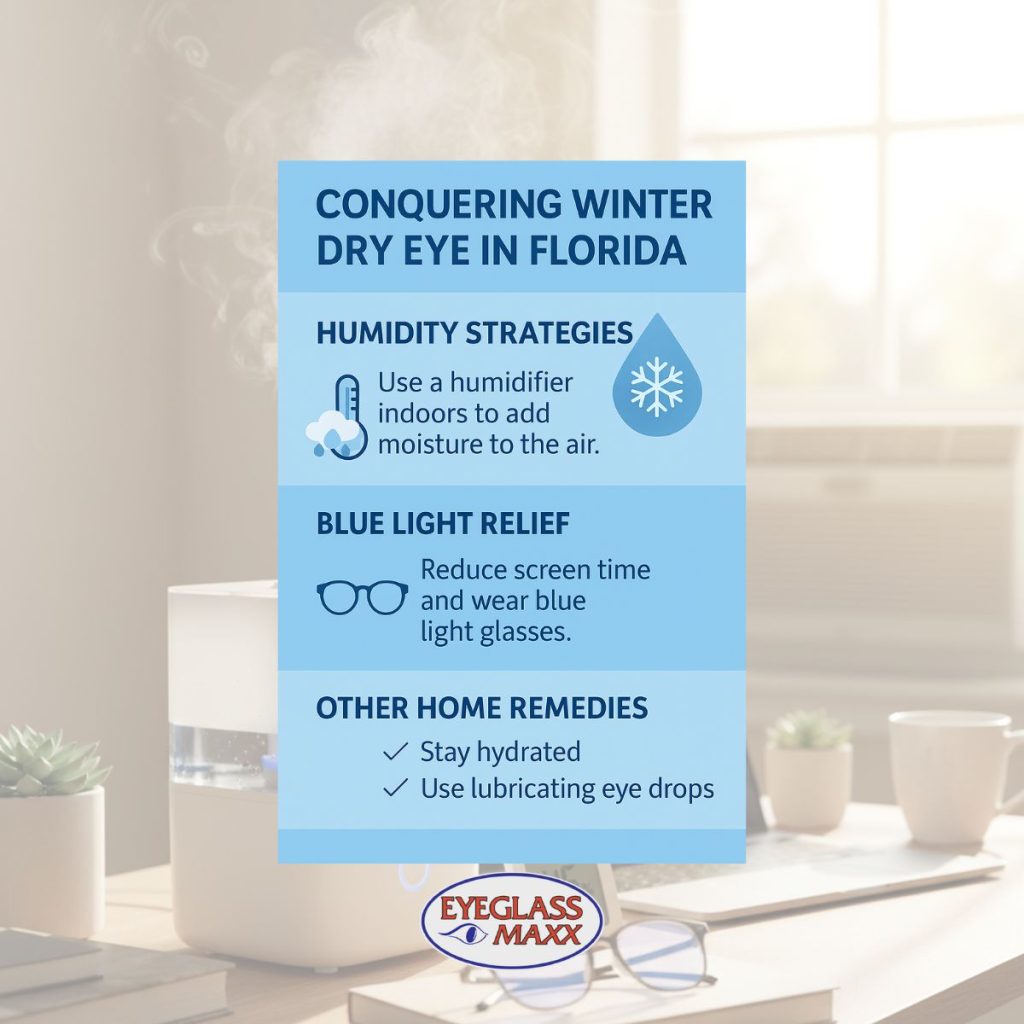
- Home Humidifier Use: Place a cool-mist humidifier in your bedroom or home office, wherever you spend the most uninterrupted time. Aim to maintain an indoor humidity level between 40% and 50%. You can monitor this with an inexpensive hygrometer.
- Avoid Direct Airflow: Reposition your desk or armchair so you are not sitting directly in the path of any air conditioning or heating vents. In the car, direct the vents toward your chest or feet, not your face.
Step 3: Master the 20-20-20 Digital Rule
This is the single most effective way to combat digital eye strain and the associated evaporative dry eye.
- The Rule: Every 20 minutes, look at an object at least 20 feet away for at least 20 seconds.
Key Takeaway: While looking away, make a conscious effort to fully blink several times. This action manually stimulates the tear glands and spreads fresh, quality tears across the surface of your eye, giving your ocular surface a mini-reset.
What to Avoid: The Blue Light Glasses Misconception
Many people buy over-the-counter blue light filtering glasses hoping to solve their dry eye symptoms.
- What to Avoid: Non-prescription blue light glasses are primarily designed to potentially help with sleep cycles (by filtering light that suppresses melatonin) or reduce digital fatigue. They do not directly treat Dry Eye Disease. The root cause of dry eye from screen use is the decreased blink rate and rapid tear evaporation, not solely the blue light itself.
- Expert Insight: Relying on blue light glasses for dry eye can mask the underlying problem. If your dry eye symptoms persist despite using home remedies, it means you need a professional diagnosis to determine the true cause—whether it’s Meibomian Gland Dysfunction (MGD), insufficient tear production, or ocular inflammation.
When Home Remedies Aren’t Enough: Seeking Professional Help
While home hacks can provide temporary relief, if you experience persistent burning, redness, or fluctuating vision, it’s time for a professional evaluation. Dry eye is a complex condition that requires expert diagnosis and customized care.
At Eyeglass Maxx, we offer comprehensive Dry Eye Evaluations that go beyond a standard exam to assess your:
- Tear quality and volume
- Meibomian gland function (the oil producers)
- Inflammation levels
Targeted Professional Treatments
Depending on the underlying cause, we offer targeted treatments that you can’t get from a drugstore, including prescription drops to manage inflammation and in-office procedures designed to open blocked oil glands.
Protect your vision and reclaim comfortable eyes this season.
Schedule a Dry Eye Evaluation: If you’re struggling with symptoms, book a comprehensive appointment:
Explore Specialized Lenses: Learn about comfortable, customized lens options for managing digital life:
Contact us today to schedule your visit with a top-rated eye doctor in Sarasota!
aafikotaaimas.org aafikotasarni.org sangkarbet sangkarbet cerutu4d link slot gacor kawijitu cerutu4d kawijitu kawijitu